On Life and Leadership, June 2026
Volume 1. No. 1.
June 2026

Welcome to the first issue of On Life and Leadership. For years, I've been collecting the quotes, articles, books, and prayers that have shaped my own walk and ministry, and a growing number of friends kept asking me to pass them along. This newsletter is that pass-along — a brief, monthly gathering of what I'm reading, thinking about, and praying through, written with pastors, leaders, and ministry partners in mind. My hope is simple: that something here meets you at the right moment, sharpens your leadership, and draws you nearer to Christ — and that you'll find it worth coming back for.
Worth Sitting With:
Here are some quotes I've gathered this month — on grace, preaching, a love that is unending, letting God vindicate, sanctification - or growing more luminous, and good works.

“If your faith is more 'white-knuckled fight' than 'open-handed surrender,' you've forgotten the Gospel. Grace is not just the way in, it's the way on. We don't graduate from our need for God’s mercy-fueled love — we grow deeper into it. His power does not replace our weakness; it meets us there — and is made perfect in it.” (Mike Woodruff)
“A concert audience does not come to watch the conductor but to listen to the music; a church congregation should not come to watch or hear the preacher, but to listen to God’s Word. The function of the conductor is to draw the music out of the choir or orchestra, in order that the audience may enjoy the music; the function of the preacher is to draw the Word of God out of the Bible, in order that the congregation may receive his Word with joy. The conductor must not come between the music and the audience; the preacher must not come between the Lord and his people. We need the humility to get out of the way.” (John Stott)
“Justice will be served. Do not spend your life trying to clear your name. It is a wiser course of action to keep on with the task at hand, to trust God to vindicate in due course.” (Alistair Begg)
“Only when our greatest love is God, a love that we cannot lose even in death, can we face all things with peace. Grief was not to be eliminated but seasoned and buoyed up with love and hope.” (Tim Keller)
“When we decide to become followers of God, we automatically align ourselves with God. When we profess faith in him, we become visible representatives of an invisible God. Our lives, our words, our actions all begin to say ‘This is what God values,’ and ‘This is what God is like.’ It falls to us, therefore, to understand the character of God and then to display it in the way we live. We ought to be wise in order to show that God is wise; we ought to be just in our dealings with others because God is always just in his dealings with others; we ought to be good and loving and merciful because God is good and loving and merciful. As Jen Wilkin says, ‘Everything we say or do will either illuminate or obscure the character of God.’ Sanctification, she says, ‘is the process of joyfully growing luminous.’ Our lives will speak truth about God insofar as they are consistent with his character, and they will speak lies about him insofar as they are inconsistent with his character. Our task is to grow luminous—to shine the light of God's character in a dark world. So it would be good to ask yourself today: Am I growing luminous?” (Tim Challies)
“He painted nothing. Yet he inspired the Michelangelos, Leonardos, Rembrandts, and Van Goghs of history. He put no ink on the page. But he moved the pens of everyone from Shakespeare, Dante, and Milton to Jane Austen, Flannery O’Connor, and J.K. Rowling. He composed no music, yet artists from Handel, Bach, and Mendelssohn, to Johnny Cash and Bob Dylan crafted soaring melodies to praise him. Dostoyevsky observed that ‘Even those who have renounced Christianity and attack it, in their inmost being still follow the Christian ideal, for hitherto neither their subtlety nor the ardor of their hearts has been able to create a higher ideal of man and of virtue than the ideal given by Christ of old.’” (Anonymous)
“God does not need your good works, but your neighbor does.” (Martin Luther)
Worth Reading:
If you've ever wondered whether the slow, unseen work of ministry is worth it, read this. The Judsons' story challenges our impatience and is a balm for anyone who feels like they've been waiting a long time for fruit: Enduring all Things for the Gospel
“Adoniram and Ann Judson were among the first formally commissioned American missionaries. Arriving in Burma (today’s Myanmar) in 1813, the Judsons labored for six years before they saw anyone convert to Christianity. Determined and diligent, they made extraordinary progress in learning native languages. Then, 11 years into their Burmese ministry, the Judsons’ world collapsed.”

This one may be a bit uncomfortable — but needed for all of us. If you've spent any time in evangelical circles lately, you'll recognize what Trevin Wax is describing. When the Tribe Eats the Church
“The tribe is hungry. You can see it in the endless line-drawing, the degrees of separation, the guilt by association that passes for discernment in too many evangelical circles. … This explains why so much energy in evangelical circles is devoted to line-drawing, often with degrees of separation straight out of the old fundamentalist playbook. If you quote that author, well, don’t you know she’s a friend of so-and-so, and so-and-so once said this and she never disavowed him, so . . . Or if you appreciate that pastor’s take on one issue, you should know he once promoted someone with a bad take on a different issue—how could you be so undiscerning? Or if you found this article helpful, don’t you know it comes from a website that also published a bad take on Trump (pro or con, depending on which tribe you’re in), and so everything from that source should be suspect . . . And on and on it goes.”
Spurgeon built one of the most remarkable ministries in church history. These four principles distilled from his leadership are worth writing on a notecard and keeping on your desk. Four Axioms for Leaders
“Our lives are filled with axioms. These truisms, even if overstated, make a helpful point that’s easy to remember. I recently wrote about three elements we could all imitate from Spurgeon’s spiritual leadership. But in this article, I want to extract four axioms from Spurgeon’s teaching on leadership. If we boil down his profound insights on leadership, we can create four simple axioms or truisms that apply to church planting and all of pastoral ministry.”
Worth Buying:
We talk a lot about stewardship of time and money in ministry — this book makes a quiet, convincing case that stewardship of the body deserves the same attention.
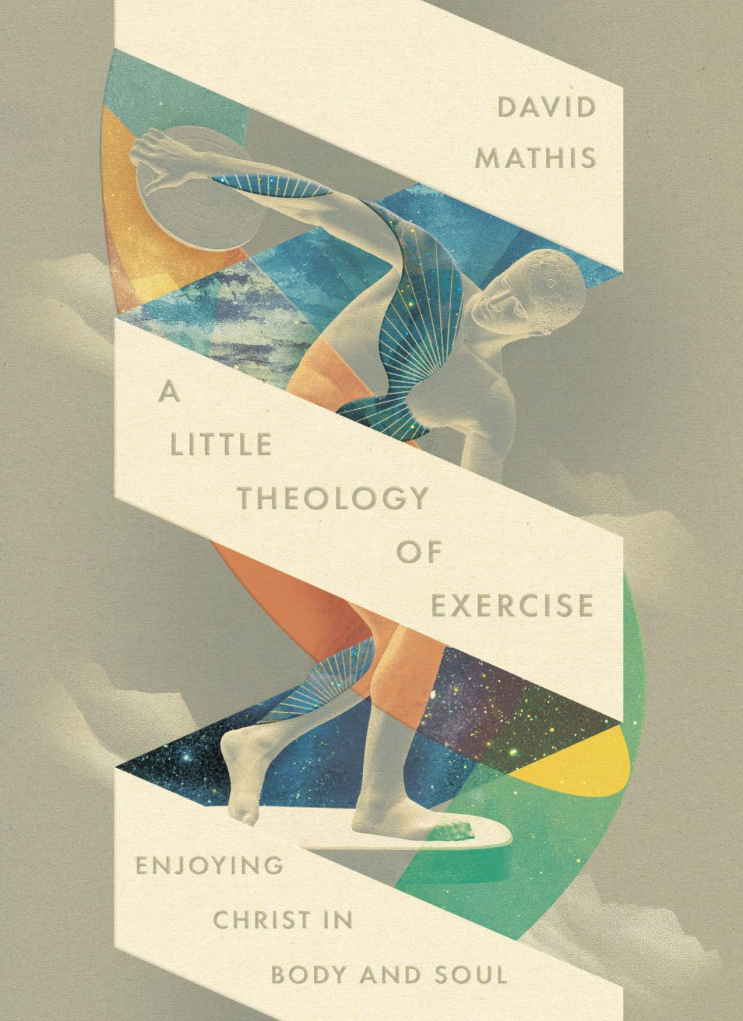
A Little Theology Of Exercise: Enjoying Christ in Body and Soul
by David Mathis
“David Mathis offers a biblical vision for physical exercise that reveals the deep connection between body and soul. Rather than viewing exercise as a secular activity or a means of self-improvement, Mathis reframes it as a God-given gift that can enhance joy in Christ to the glory of God. Whether you’re an athlete or someone simply seeking a more faithful approach to fitness, this book will challenge and encourage you.”
Jeremy Treat, Pastor for Preaching and Vision, Reality LA, Los Angeles, California; Professor of Theology, Biola University
Without Comment:
During Tim Cook's 15-year tenure, Apple's market value grew $682 million per day.
According to Pew, Americans over 60 now spend more than half of their daily leisure time in front of a screen.
Worth Imitating:
As a runner, I read this with equal parts inspiration and personal challenge. Listen to what she says:

“I decided to try running when I was 100 years old. I think having challenges as you get older is important because it keeps your interest in something. For me, that’s running. My kids encouraged me to participate in the Senior Games, and in 2017, I set a new National Senior Games 100+ record for the 50-meter race. I finished in 18.31 seconds.
I’m 105 now, but I still train every day. For me, that’s walking about a mile a day around my neighborhood. It’s a safer and more sustainable way for me to stay active, and I’ve been lucky that my feet, knees, and hips have remained injury-free. I’ve found that when I start running, my body pumps up and gives me whatever it takes to make me fly. When I run a race, I’m out of breath, and when I get to the end, I need to be caught by someone so I don’t fall down. I love the feeling. My children tell me I’m supposed to inspire people to keep healthy and keep doing active things. So my advice to any runner is to eat right, keep moving, and keep a competitive edge. Keep wanting to win.”
By Julia Hawkins, As Told To Emily Shiffer
From ‘How to Run Strong Forever’ published July 8, 2021.
And to wrap it all up…
Worth Praying:

“When I consider your heavens,
the work of your fingers,
the moon and the stars,
which you have set in place,
What is man that you are mindful of him,
The son of man that you care for him?
You made him a little lower than
the heavenly beings
and crowned him with glory and honor.”
Psalms 8:3-5 | NIV84
And finally, this prayer by Anglican Priest Richard Baxter (1615-1691) was quoted in a sermon I heard while in Indonesia a few weeks ago:
Lord, It Belongs Not to My Care
Lord, it belongs not to my care
Whether I die or live;
To love and serve Thee is my share,
And this Thy grace must give.If life be long, I will be glad,
That I may long obey;
If short, yet why should I be sad
To welcome endless day?Christ leads me through no darker rooms
Than He went through before;
He that unto God’s kingdom comes
Must enter by this door.Come, Lord, when grace hath made me meet
Thy blessèd face to see;
For if Thy work on earth be sweet
What will Thy glory be!Then I shall end my sad complaints
And weary sinful days,
And join with the triumphant saints
That sing my Savior’s praise.My knowledge of that life is small,
The eye of faith is dim;
But ’tis enough that Christ knows all,
And I shall be with Him.Richard Baxter
Anglican Priest
Keep reading, keep running, keep growing luminous.
Grace & Peace,
